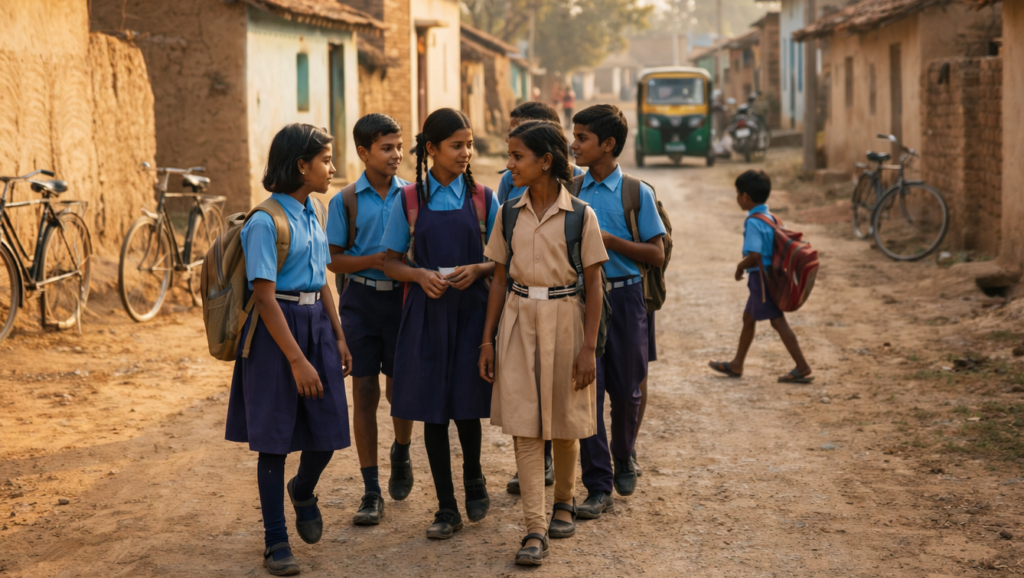
Because the right support at the right age changes everything.
DISHA supports bright and deserving students from financially challenged families who are at risk of dropping out during critical academic years.
By addressing financial stress, lack of guidance, and emotional challenges early, DISHA ensures that children remain in school and continue moving confidently toward their future.
Why DISHA Matters
Many children discontinue education between Classes 8 and 10 — not because they lack talent, but because life becomes too heavy too early.
A sudden financial setback, rising school expenses, lack of academic guidance, or emotional stress can push students out of school permanently.
DISHA intervenes at this critical stage, ensuring that small challenges do not turn into lifelong setbacks.
Who We Support
Students from financially challenged households
Children studying in Classes 8 to 10
Students identified as at risk of dropping out
Families facing temporary financial or social crises
Support Provided
School Fee Support
Partial or full school fee assistance to prevent students from discontinuing education.
Learning Essentials
Uniforms, books, stationery, and other essential academic materials.
Mentorship & Guidance
Study planning, motivation, emotional support, and academic mentoring.
Digital Learning Access
online learning resources and digital exposure to strengthen learning outcomes.
How DISHA Work
Identify At-Risk Students
We work with schools and communities to identify students at risk of dropping out.
Assess Needs
We understand the child’s academic, financial, and emotional requirements.
Provide Targeted Support
Financial aid, learning resources, and mentoring are provided based on need.
Monitor Progress
Continuous follow -ups with families and schools ensure educational continuity.
Impact Goal
To keep children in school, strengthen academic performance, and help students move confidently toward higher education or skill-based career pathways.
Through timely intervention and continuous support, DISHA helps students overcome barriers that once threatened their education.
What begins as short-term assistance often becomes a turning point — restoring confidence, stability, and belief in the future.